Breaking News :

HM The Sultan Leads Farwell Party for Emir of Qatar

HM The Sultan Presides over Student Festival

Over 70 Teachers Trained in Financial Literacy through Maliyat Academy from Bank Muscat

Oman & Belarus: Towards Expanding Partnerships in Various Fields

HM The Sultan Visits Belgian Port of Antwerp

“Oman and Zanzibar Strengthen Bilateral Ties: Focus on Economic, Cultural, and Health Cooperation”

COMEX Global Technology Show 2024 Kicks off

HM The Sultan Arrives in Kuwait

Kuwaiti diplomat: Omani Sultan’s Kuwait visit indicative of strong ties

UAE President holds dinner banquet at Qasr Al Watan in honour of Sultan Haitham bin Tariq

UAE President receives Sultan of Oman upon arrival in UAE on state visit

Oman and UAE: Fraternal Bonds, Strategic Relations and Economic Partnership

OIA Announces Social Investment Policy, Launches “Qimam” Platform

POPS Supervisory Committee Holds First Meeting in 2024

Bank Muscat’s Sayyarati Auto Finance Option Comes with the Best Financing Facilities for Customers

“Ooredoo Oman Welcomes Khawla Al-Amiri as Chief People Officer, Reinforcing Commitment to Local Leadership Empowerment”

Bank Muscat Launches EAGLEs Programme: A Pioneering Leadership Engagement Across Branch Network

“Forging Tomorrow: A Global Imperative for Advanced AI Infrastructure”

“High-Paying Careers in Artificial Intelligence: Securing Your Future in the Evolving Job Market”

HM The Sultan Issues Two Royal Decrees

Unlocking New Horizons for Entrepreneurs: The Fourth Industrial Revolution

Royal Army of Oman Celebrates Passing Out of Officer Cadets, University Officers

HM The Sultan Offers Condolences on the Death of Kuwaiti Emir

HM The Sultan Gives Audience to Business People in India

HH Sayyid Theyazin Conveys HM The Sultan’s Greetings to Russian President

First Muscat Dialogue Sessions Begin

Oman and Switzerland Strengthen Bilateral Cooperation with Multiple Memoranda of Understanding

Empowering Coastal Women in Oman: “Mina” Project Unveiled

Information Minister Affirms Keenness to Strengthen Communication with International Media Institutions

“Oman’s Education and Innovation Drive: Sultan Haitham’s Vision”

UAE Space Agency launches National Space Academy to develop national cadres

HM The Sultan Presides over 8th Term Convening of Council of Oman

Selecting Topics Phase Launched of “Together we Make Progress” Forum

HM The Sultan Issues 2 Royal Decrees

Interior Minister visits Operations Chamber of Shura Council Elections

Omanis Cast Ballots for Shura Council’s 10th Term Membership

“Navigating Talent Challenges in Oman’s Telecom Sector”

“Bank Merger in Oman: A Human Resources Transformation Story”

Omantel’s 5G Excellence Recognized with “Samena Communications Award”

NHS scientist awarded £58,000 after being named ‘Paininarse’ on spreadsheet

‘Kill list’ | Mystery doc shows list of LinkedIn staff facing redundancy, days before HR announcement

HM The Sultan Receives Ambassadors’ Credentials

“Empowering Omani Women: A Message of Hope and Progress”

Mohammed bin Rashid opens GITEX GLOBAL

HH Sayyid Bilarab Chairs Meeting of Omani Startups’ Supervisory Committee

“Dhi Yazan bin Haitham Al Said Inaugurates Duqm Economic Forum “

Omani Woman: Clear Vision & Remarkable Achievements

“Strategies for Cultivating a Healthy and Productive Work Environment”

“Essential Reading for HR Professionals: 17 HR Books You Can’t Miss in 2023”

“Future-Proofing Your Career: Essential Skills for Tomorrow’s Job Market”

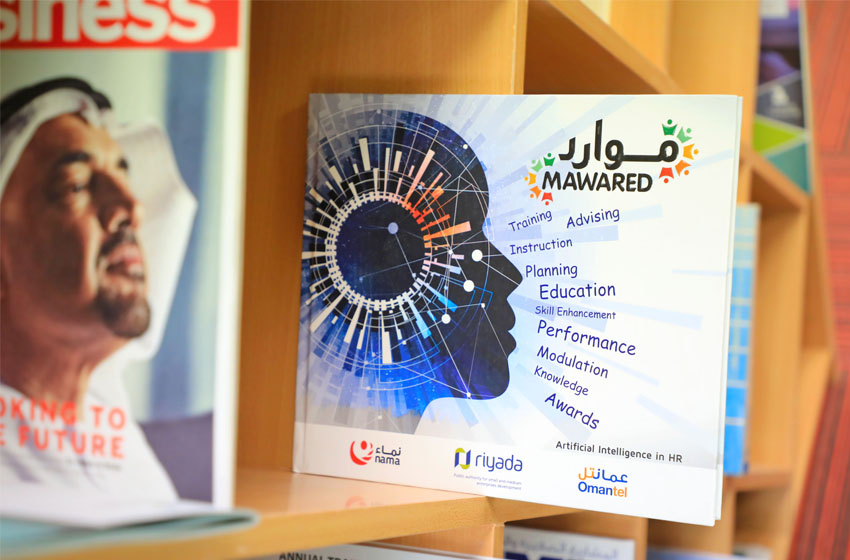
MAWARED annual book

Transformational Leadership: Inspiring Change and Achieving Excellence

“al sulaam Program (Episode four) with Dr. Aamal al bussaidi .”

“al sullam Program (Episode Two) with Dr. Ahmed Al-Ghusani.”

Nama Group and Omani Society for Human Resource Management (OSHRM) announce strategic partnership in Human Resources development

Workshop Held on Strengthening Data-Driven Decision-Making

Oman Successfully Performs First Heart Transplant from Brain-Dead Donor to Omani Patient

Saudi Military Delegation Visits Maritime Security Centre

Deputy PM for Defence Affairs Receives Ambassador of Bangladesh

Kuwait, Shell renew cooperation

UAE President, Australian Governor-General discuss bilateral relations

Urban Air Mobility Forum Kicks Off

Strategic Investments Inked in Closing Day of Advantage Oman Forum

Oman Participates in Arabian Travel Market Exhibition in Dubai

Foreign Minister, Saudi Counterpart Visit Empty Quarter Border Crossing

May 1, 2026

The Impact of Artificial Intelligence on the Gulf Region: Current Trends and Future Implications

Which regions will gain the most from AI?

Which regions will gain the most from AI?

BY : wahab aljadidi

Artificial Intelligence (AI) is rapidly transforming various sectors worldwide, and its influence on the Gulf region is profound. This report examines the current impact of AI on the Gulf countries and explores how it is expected to shape the region’s future.

Artificial Intelligence (AI) is going to be a big game changer in the global economy, and much of the value potential is up for grabs. We estimate that AI could contribute up to $15.7 trillion to the global economy in 20301, more than the current output of China and India combined. Of this, $6.6 trillion is likely to come from increased productivity and $9.1 trillion is likely to come from benefits to consumers.

Current Impact of AI in the Gulf:

  1. Economic Growth: AI adoption in the Gulf has led to significant economic growth by enhancing productivity, efficiency, and innovation across industries such as finance, healthcare, and energy.
  2. Job Market: While AI automation has the potential to displace certain jobs, it also creates new opportunities for skilled workers in AI development, data analysis, and robotics.
  3. Smart Cities: Gulf cities like Dubai and Doha are embracing AI-driven technologies to improve urban planning, transportation, and public services, leading to enhanced quality of life for residents.
  4. Healthcare: AI-powered healthcare solutions are revolutionizing patient care in the Gulf, from predictive analytics for disease prevention to robotic surgery techniques for precision interventions.
Contribution of AI to industry in 2030
 Absolute contribution in 2030 (US$ billions)Contribution of AI to Middle East GDP by industry
Construction and Manufacturing$9912.4%
Energy, Utilities & Resources$786.3%
Public sector, including health and education$5918.6%
Financial, Professional, Administrative Services$3813.6%
Retail, Wholesale Trade, Consumer Goods, Accomodation and Food Services$2319%
Transport and Logistics$1215.2%
Technology, Media, Telecommunications$1014%

GCC Countries and Generative AI: A Glimpse into the Future

In the heart of the GCC countries, a massive technological change is underway, thanks to Generative AI. As we step into 2024, the GCC region is set to witness a significant shift in how Generative AI is utilized across various sectors. This change is marked by machines not only deciphering things but also producing new content, fostering innovation, enhancing efficiency, and ushering societal transformation. The significance of this development is highlighted by the forecasted growth of the generative AI market, which is expected to reach a staggering $110.8 billion USD by 20301.

Future Implications of AI in the Gulf:

  1. Economic Diversification: The Gulf countries are increasingly investing in AI research and development as part of their economic diversification strategies, aiming to reduce dependence on oil revenues and foster innovation-driven growth.
  2. Education and Workforce Development: There is a growing emphasis on AI education and skill development initiatives to equip the Gulf workforce with the competencies needed for the AI-driven future job market.
  3. Governance and Regulation: As AI technologies become more prevalent, there is a need for robust governance frameworks and regulations to address ethical, privacy, and security concerns in the Gulf region.
  4. Socio-cultural Impact: AI adoption may reshape socio-cultural dynamics in the Gulf, influencing aspects such as education, healthcare norms, and interpersonal relationships.
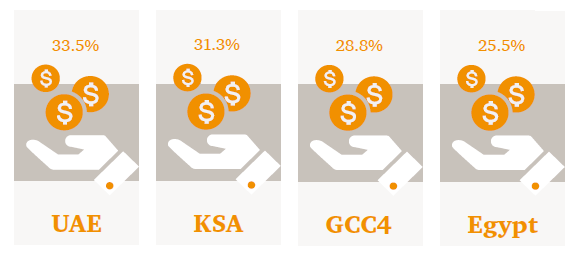
The average annual growth in the contribution of AI by region between 2018-2030

Conclusion:
The Gulf region stands at the forefront of AI adoption, leveraging its transformative potential to drive economic development, innovation, and societal progress. While the current impact of AI is already notable, its future implications hold the promise of reshaping various aspects of Gulf societies and economies in the years to come. Effective governance, investment in education, and proactive workforce development will be crucial in maximizing the benefits of AI while mitigating potential challenges.

Facts and figures /PWC

Read Previous

Saudi Labor Market Sees Dramatic Shift: Unemployment Down, Number of Women in the Labor Market Up

Read Next

HM The Sultan Arrives in Kuwait

Most Popular